
Knowing how to prevent blood clots in a bedridden patient is an important part of safe home care. When someone spends most of the day in bed, limited movement can slow blood flow in the legs and increase the risk of developing a blood clot.
For families caring for a bedridden relative, the goal is not simply to keep the person comfortable in bed. Appropriate movement, regular observation, following the prescribed care plan, and recognizing warning signs can help reduce the risk of serious complications.
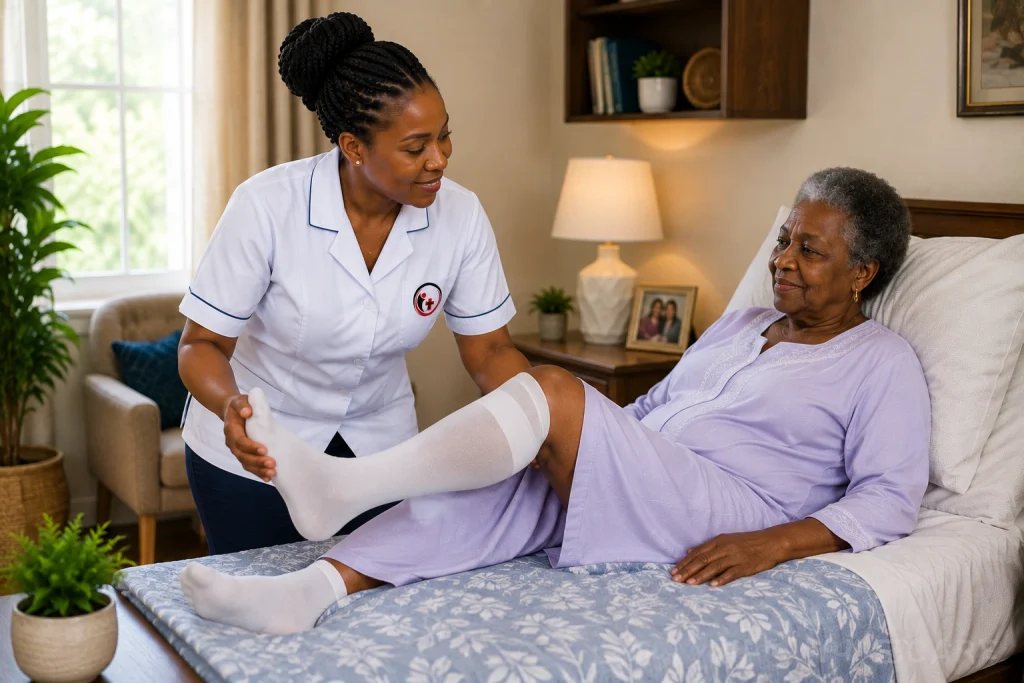
What Is a Blood Clot?
A blood clot can develop inside a deep vein, most commonly in the lower leg, thigh, or pelvis. This is called deep vein thrombosis (DVT).
If part of the clot breaks away and travels to the lungs, it can cause a pulmonary embolism (PE), which requires immediate medical attention.
This is why bedridden patient care should include attention to circulation and mobility—not just feeding, bathing, and medication.
Why Are Bedridden Patients at Risk of Blood Clots?
Understanding how to prevent blood clots in a bedridden patient starts with recognizing why prolonged immobility increases the risk.
Prolonged bed confinement and limited movement can slow blood flow and increase the risk of developing a blood clot. The CDC’s blood clot risk factors guide explains how limited movement and other factors can increase DVT and PE risk.
The risk may be greater when immobility occurs together with factors such as:
- Older age
- Recent surgery or hospitalization
- Previous blood clots
- Cancer
- Obesity
- Certain chronic illnesses
- Major injury or trauma
- Paralysis or severe mobility limitations
7 Ways to Help Prevent Blood Clots in a Bedridden Patient
1. Encourage Safe Movement
One of the most important steps in home care for bedridden patients is avoiding unnecessary prolonged immobility.
If the person’s healthcare provider has approved movement, help them change position and move their limbs regularly. Depending on their condition, this may include sitting up, standing, walking with assistance, or prescribed exercises.
Never force movement that is unsafe or outside the person’s care plan.
For someone who cannot walk, a healthcare professional may recommend appropriate leg and ankle movements. The CDC also recommends leg exercises such as raising and lowering the heels or toes and tightening and releasing leg muscles for people who are sitting for prolonged periods.
how to prevent contractures in a bedridden patient
2. Follow the Prescribed Mobility Plan
Not every bedridden person has the same level of mobility.
Some may be able to walk with assistance, while others may need help turning in bed or performing gentle movements.
A nurse or healthcare provider can establish an appropriate mobility plan based on the person’s condition.
This is particularly important after surgery, serious illness, injury, or hospitalization.
3. Avoid Keeping the Person Completely Still Without a Medical Reason
Bed rest may sometimes be medically necessary, but unnecessary immobility should be avoided.
If the person is permitted to move, bed bound patient care should include appropriate changes in position and safe activity throughout the day.
For people who cannot move independently, caregivers may need to assist with repositioning and prescribed limb movements.
how to treat pressure sores in bedridden patients
4. Keep the Person Adequately Hydrated—Unless Fluids Are Restricted
Adequate fluid intake is an important part of general home care, but hydration needs differ from person to person.
Someone with certain heart, kidney, or other medical conditions may have fluid restrictions.
Therefore, caregivers should follow the person’s healthcare provider’s instructions rather than encouraging excessive fluid intake simply to prevent blood clots.
5. Watch the Legs Every Day
Regular observation is an important part of bedridden patient nursing care.
Look for changes such as:
- New swelling in one leg
- Unexplained leg pain or tenderness
- Increased warmth
- Redness or discoloration
These can be signs of DVT and should be assessed promptly by a healthcare professional.
Importantly, DVT does not always cause obvious symptoms, so the absence of symptoms does not completely eliminate the risk.
6. Follow Medical Advice About Compression or Medication
Some people at increased risk of blood clots may be prescribed preventive measures such as graduated compression stockings or anticoagulant medication.
These should only be used when recommended by an appropriate healthcare professional.
Caregivers should never start, stop, or change anticoagulant medication without medical advice.
7. Pay Extra Attention After Hospitalization or Surgery
The risk of blood clots can be particularly important when someone becomes bedridden following hospitalization, surgery, injury, or serious illness.
Before the person returns home, families should ask the healthcare team about their individual blood-clot risk and what prevention measures should continue at home.
post-hospital care at home in Yaoundé
Warning Signs of a Blood Clot in the Leg
Families providing caring for bedridden elderly at home should know the warning signs of DVT.
Contact a healthcare professional promptly if the person develops:
- Swelling of a leg or arm
- Unexplained pain or tenderness
- Warmth over the affected area
- Redness or discoloration
Do not attempt to diagnose a blood clot at home. DVT requires appropriate medical assessment and may require imaging or other tests.
🚨 Signs of a Pulmonary Embolism: Get Emergency Help
A blood clot can travel to the lungs and cause a pulmonary embolism.
Seek immediate emergency medical attention if a bedridden person develops:
- Sudden difficulty breathing
- Chest pain, especially pain that worsens with deep breathing or coughing
- Coughing up blood
- A very fast or irregular heartbeat
- Severe lightheadedness or fainting
Do not wait to see whether these symptoms disappear.
How Professional Home Nursing Can Help
Preventing complications is an important part of professional home nursing care in Yaoundé.
A trained nurse can help monitor mobility, follow the prescribed care plan, observe changes in the person’s condition, assist with appropriate movement, administer prescribed medications, and communicate concerning changes to the family or healthcare provider.
At Leo Beri’s Home Health Care Agency, home nursing services in Yaoundé include health monitoring, medication support, wound care, elderly nursing support, and assistance with prescribed care routines.
For families who cannot always be physically present, professional home care can also provide an additional layer of support and communication. Our services are available for families arranging care for loved ones in Yaoundé and surrounding communities.
home healthcare services in Yaoundé
elderly home health care in Yaounde
Frequently Asked Questions
Can a bedridden person get a blood clot?
Yes. Prolonged immobility and confinement to bed can slow blood flow and increase the risk of DVT.
How can I prevent blood clots in a bedridden patient?
Follow the prescribed care plan, encourage safe movement when permitted, avoid unnecessary prolonged immobility, monitor for warning signs, and follow any medical recommendations for clot prevention.
Should I massage a swollen leg if I suspect a blood clot?
Do not try to treat suspected DVT yourself. A new swollen, painful, warm, or discolored limb needs prompt medical assessment.
Can a blood clot happen without symptoms?
Yes. Some people with DVT have no symptoms, which is why people at increased risk should follow their healthcare provider’s prevention plan.
Final Thoughts
Preventing blood clots in a bedridden patient requires consistent observation and appropriate movement rather than a single intervention. Families should follow the person’s individualized medical plan, avoid unnecessary immobility when movement is permitted, and watch carefully for changes in the legs or breathing.
Most importantly, never ignore possible symptoms of DVT or pulmonary embolism. Early recognition and appropriate medical assessment can make a critical difference.
If caring for a bedridden loved one has become difficult to manage alone, professional home nursing care in Yaoundé can provide additional support with monitoring, medication routines, mobility assistance, and other appropriate care needs.
