
Falls are one of the most common safety concerns for older adults, particularly those with poor balance, reduced mobility, vision problems, chronic health conditions or medication-related dizziness. Learning how to prevent falls in elderly people can help families reduce avoidable injuries and protect an older person’s independence at home.
A fall may result in bruises, fractures, head injuries, loss of confidence and reduced mobility. The World Health Organization identifies falls as a major global health problem, with older adults at particularly high risk of serious injury.
The good news is that many fall risks can be identified and reduced.
In this guide, we explain how to prevent falls in elderly people at home using
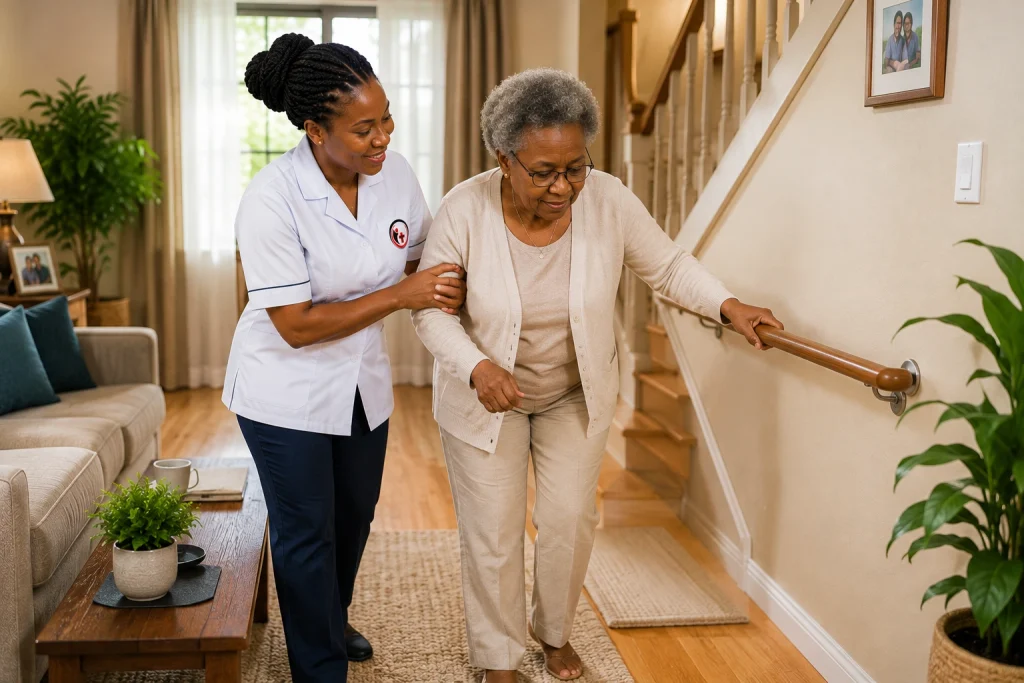
Why Are Elderly People More Likely to Fall?
WHO identifies falls as a major global health problem. Understanding why falls happen is the first step in learning how to prevent falls in elderly people.
As people age, changes in muscle strength, balance, eyesight, hearing, mobility and reaction time can increase the risk of falling. Certain medical conditions and medications can also contribute to dizziness, weakness or problems with balance.
Common fall-risk factors include:
- Poor balance
- Muscle weakness
- Difficulty walking
- Poor eyesight
- Hearing problems
- Arthritis and joint stiffness
- Previous falls
- Dizziness or fainting
- Low blood pressure
- Certain medications
- Dementia or confusion
- Unsafe floors, stairs or bathrooms
- Inadequate lighting
This means fall prevention should involve more than simply telling an older person to “be careful.”
10 Ways to Prevent Falls in Elderly People at Home
1. Remove Clutter From Walkways
One of the simplest ways to prevent falls is to keep walking areas clear.
Remove objects that an older person could trip over, including:
- Shoes
- Bags
- Boxes
- Toys
- Electrical cables
- Small furniture
- Unnecessary items on the floor
Keep commonly used walking routes between the bedroom, bathroom, living room and kitchen clear.
The CDC’s home fall-prevention checklist specifically recommends keeping stairs and walking areas free of objects and correcting uneven or unsafe surfaces.
2. Secure or Remove Loose Rugs
Loose rugs and mats can move unexpectedly under someone’s feet.
If possible, remove unnecessary rugs from walking areas. If a rug is necessary, make sure it is firmly secured and does not create a raised edge that could cause someone to trip.
Pay particular attention to:
- Bedroom entrances
- Hallways
- Living rooms
- Bathroom entrances
- Kitchen floors
3. Improve Lighting Throughout the Home
Poor lighting can make it difficult for an older person to see obstacles, changes in floor levels or stairs.
Make sure important areas are well lit, especially:
- Stairways
- Hallways
- Bedrooms
- Bathrooms
- Entrances
- Outdoor pathways
A bedside lamp or easily accessible light switch can be especially helpful at night.
The CDC recommends adequate lighting around stairs, including accessible switches at the top and bottom.
4. Make the Bathroom Safer
Bathrooms can be particularly dangerous because wet surfaces can become slippery.
To reduce fall risks:
- Keep floors as dry as possible.
- Use appropriate non-slip surfaces.
- Install grab rails where professionally appropriate.
- Make sure the toilet is easy to access.
- Provide adequate lighting.
- Avoid leaving water or toiletries on the floor.
The NHS recommends measures such as non-slip mats and grab rails as part of fall prevention.
For older adults who need additional support, professional elderly home health care can provide another layer of safety by helping families monitor changes in mobility, daily functioning and general health.
5. Encourage Safe Footwear
Footwear can make a major difference.
Encourage older adults to wear shoes or slippers that:
- Fit properly
- Stay securely on the feet
- Have good grip
- Do not have excessively smooth soles
- Are comfortable for walking
Avoid walking around the home in loose footwear that can easily slip off.
The NHS specifically recommends well-fitting footwear with good grip for people at risk of falls.
6. Keep Frequently Used Items Within Easy Reach
An older person should not have to climb, stretch excessively or stand on a chair to reach everyday items.
Keep frequently used objects at a comfortable height, such as:
- Plates and cups
- Medicines
- Clothing
- Toiletries
- Phones
- Walking aids
Avoid placing essential items on very high shelves or deep, difficult-to-reach cupboards.
Never encourage an elderly person to stand on a chair or unstable stool to reach something.
7. Encourage Strength and Balance Activities
Physical activity can help older adults maintain strength, mobility and balance.
Appropriate activities should be selected according to the person’s health, mobility and physical ability. Some older adults may benefit from professionally guided strength and balance exercises.
WHO identifies gait, balance and functional training among effective fall-prevention interventions for older people.
If an older person has significant mobility problems, recent falls, severe weakness or a medical condition affecting movement, seek professional advice before starting a new exercise programme.
8. Review Medications With a Healthcare Professional
Some medicines can contribute to dizziness, drowsiness, weakness or changes in blood pressure, potentially increasing fall risk.
However, never stop or change prescribed medication without professional advice.
Instead, ask a qualified healthcare professional to review the person’s medications, particularly if falls or dizziness have recently developed.
WHO and NHS guidance both recognize medication-related factors as relevant to fall risk.
Families caring for an elderly person at home can also benefit from professional medication support at home, particularly when several medicines are being taken or medication routines are becoming difficult to manage.
9. Encourage Regular Vision and Hearing Checks
Poor vision can make it difficult to see obstacles, stairs, uneven flooring and other hazards.
Encourage older adults to have their eyesight checked regularly and to use prescribed glasses correctly.
Hearing problems may also affect awareness of what is happening around them and can contribute to balance difficulties in some situations.
The NHS recommends regular eye and hearing checks as part of reducing fall risk.
10. Make Stairs and Outdoor Areas Safer
Stairs require special attention.
Make sure:
- Handrails are secure.
- Steps are not damaged or uneven.
- Stairways are adequately illuminated.
- Objects are never left on the stairs.
- Floor surfaces are not unnecessarily slippery.
- Outdoor pathways are kept clear.
- Broken or uneven surfaces are repaired where possible.
WHO notes that stairs, entrances, bathrooms, kitchens and outdoor pathways can present important fall hazards for older adults.
How to Prevent Falls in Elderly People During the Night
Nighttime can be a particularly risky period because an older person may wake up suddenly and walk in darkness or while still drowsy.
To improve nighttime safety:
- Keep a light within easy reach of the bed.
- Use adequate hallway lighting.
- Keep the route to the bathroom clear.
- Avoid leaving objects on the floor.
- Keep walking aids close to the bed if the person uses one.
- Encourage the person to sit on the edge of the bed briefly before standing if they are prone to dizziness.
If nighttime urination is frequent, discuss the issue with a healthcare professional rather than allowing repeated bathroom trips to become a fall hazard.
How to Prevent Falls in Elderly People With Mobility Problems
Older adults who use walking sticks, walkers or other mobility aids may have a higher risk of falling if the equipment is unsuitable or used incorrectly.
A walking aid should be appropriately selected and adjusted for the individual.
Do not encourage an older person to walk without their prescribed mobility aid simply because they “look strong enough.”
If someone has recently become unsteady, has fallen repeatedly or has developed difficulty walking, professional assessment may be appropriate.
If an older person has recently become unsteady, has fallen repeatedly or has developed difficulty walking, professional home nursing care can provide additional support with mobility, safety monitoring and daily care.
What Should Caregivers Check Every Day?
Caregivers can make fall prevention part of the daily routine.
A simple daily safety check can include:
- Are the floors clear?
- Is the bathroom dry and safe?
- Is the walking aid nearby?
- Are lights working?
- Is the person wearing safe footwear?
- Has anything been moved into a walkway?
- Does the person appear unusually weak or dizzy?
- Has there been any recent change in balance?
- Are frequently used items within reach?
- Has the person experienced a fall or near-fall?
These small checks can help identify problems before they cause an injury.
What Health Problems Can Increase Fall Risk?
Certain health problems can make falling more likely.
Examples include:
- Arthritis
- Stroke
- Parkinson’s disease
- Dementia
- Diabetes
- Low blood pressure
- Vision impairment
- Muscle weakness
- Balance disorders
- Neurological conditions
An older adult with several of these conditions may require a more comprehensive fall-risk assessment.
The goal is not simply to make the home safer. It is also to identify and address health factors that may be contributing to falls.
What to Do If an Elderly Person Falls
If an elderly person falls, do not immediately pull them up.
First, stay calm and check whether they are conscious and whether they appear to have an obvious injury.
Look for signs such as:
- Severe pain
- Bleeding
- Difficulty moving
- Deformity
- Confusion
- Loss of consciousness
- Severe headache
- Difficulty breathing
- New weakness
- Neck or back pain
If a serious injury is suspected, seek emergency medical assistance rather than attempting to move the person unnecessarily.
If they cannot safely get up, get professional help.
Even when an older person appears uninjured, a fall should not simply be dismissed. A healthcare professional may need to determine why the fall happened and whether anything can be done to reduce the risk of another fall.
The NHS also advises older adults to remain calm after a fall and seek help when they cannot safely get up.
When Should You Seek Professional Help for Fall Prevention?
Consider professional assessment when an older adult:
- Has fallen more than once
- Has become increasingly unsteady
- Needs help walking
- Experiences frequent dizziness
- Has difficulty getting out of bed or a chair
- Has recently started a medication associated with dizziness or drowsiness
- Has significant vision problems
- Has difficulty safely using stairs or the bathroom
- Is becoming increasingly dependent on family members for mobility
A comprehensive approach may include assessment of the person’s health, medications, mobility, balance, vision and home environment.
WHO recommends multifactorial fall-risk assessment followed by interventions tailored to the risks identified.
How Families in Yaoundé Can Reduce Fall Risks at Home
For families caring for an elderly parent in Yaoundé, fall prevention should become part of everyday home care.
Simple changes such as clearing walkways, improving lighting, making bathrooms safer, ensuring appropriate footwear and monitoring mobility can make a significant difference.
For older adults who need additional support, professional home healthcare can provide another layer of safety by helping families monitor changes in mobility, daily functioning and general health.
Knowing how to prevent falls in elderly people is not about restricting an older person’s independence. It is about creating an environment where they can move around as safely and confidently as possible.
Start with the basics: remove hazards, improve lighting, make bathrooms safer, use appropriate footwear, keep essential items within reach, support safe physical activity and address health or medication-related risk factors.
Most importantly, take repeated falls, dizziness, weakness or new mobility problems seriously.
With the right combination of home safety, health monitoring, appropriate physical activity and professional support, families can take meaningful steps toward reducing fall risks and helping older adults maintain their independence.
Leo Beri’s Home Health Care Agency provides professional home healthcare support in Yaoundé for individuals and families who need quality care in the comfort of home.
Frequently Asked Questions About Preventing Falls in Elderly People
What is the best way to prevent falls in elderly people at home?
The best approach is usually a combination of measures rather than one single solution. Remove trip hazards, improve lighting, make bathrooms and stairs safer, encourage appropriate strength and balance activities, review medications with a healthcare professional and address vision or mobility problems.
What are the biggest fall hazards for elderly people at home?
Common hazards include loose rugs, cluttered walkways, poor lighting, slippery bathroom floors, unsafe stairs, loose electrical cables, uneven outdoor pathways and objects placed where an older person needs to walk.
Should elderly people use walking sticks or walkers?
A walking aid may be helpful for someone with mobility or balance difficulties, but it should be appropriately selected and adjusted. A healthcare professional can advise whether a walking stick, walker or another aid is appropriate.
Can medications cause falls in elderly people?
Some medications can contribute to dizziness, drowsiness, weakness or blood-pressure changes that may increase fall risk. Older adults should discuss possible medication-related problems with a healthcare professional and should never stop prescribed medicines without professional advice.
How can I make a bathroom safer for an elderly parent?
Keep the floor dry, improve lighting, remove unnecessary obstacles and consider appropriate non-slip surfaces and grab rails. The exact equipment should be suitable for the person’s mobility and bathroom layout.
What should I do if my elderly parent falls?
Stay calm and check for signs of serious injury. Do not immediately pull the person up if an injury may have occurred. If they cannot safely get up or have severe pain, confusion, bleeding, difficulty breathing or other concerning symptoms, seek urgent medical assistance.
Can exercise help prevent falls in older adults?
Appropriately designed strength, balance and functional exercises can help reduce fall risk. The programme should match the individual’s health and mobility, particularly if they already have significant balance problems or a history of falls.
Final Thoughts
Knowing how to prevent falls in elderly people starts with recognizing the risks before an accident happens. Simple changes such as clearing walkways, improving lighting, making the bathroom safer, using appropriate footwear and keeping frequently used items within reach can make the home much safer for an older adult.
Families should also pay attention to health factors such as poor balance, muscle weakness, dizziness, vision problems and medication side effects. When an elderly person has repeated falls or increasing difficulty walking, professional assessment and support may be necessary.
For families in Yaoundé caring for an elderly parent, you do not have to manage everything alone. Leo Beri’s Home Health Care Agency provides professional, compassionate home healthcare support designed to help older adults remain safe, comfortable and independent in their own homes.
If your loved one needs professional elderly home health care, medication support or professional home nursing care, our qualified healthcare team is available to provide appropriate support at home.
Protecting an elderly loved one begins with preventing avoidable risks. Start making their home safer today.
