
It can be difficult to recognize the right time to arrange professional support, especially when your parent still wants to remain independent. However, certain changes in daily life can indicate that an older adult is struggling to safely manage alone. Knowing the signs your elderly parent needs a caregiver can help you take action before a small problem becomes a serious one.
Your parent may not directly tell you that they need help. Sometimes the signs are subtle: an untidy home, missed medications, difficulty preparing meals, unexplained weight loss, repeated falls, or increasing difficulty with bathing and dressing.
The National Institute on Aging recommends paying attention to changes in an older person’s home, hygiene, nutrition, mobility, medication use, memory, and overall health when determining whether additional support may be needed.
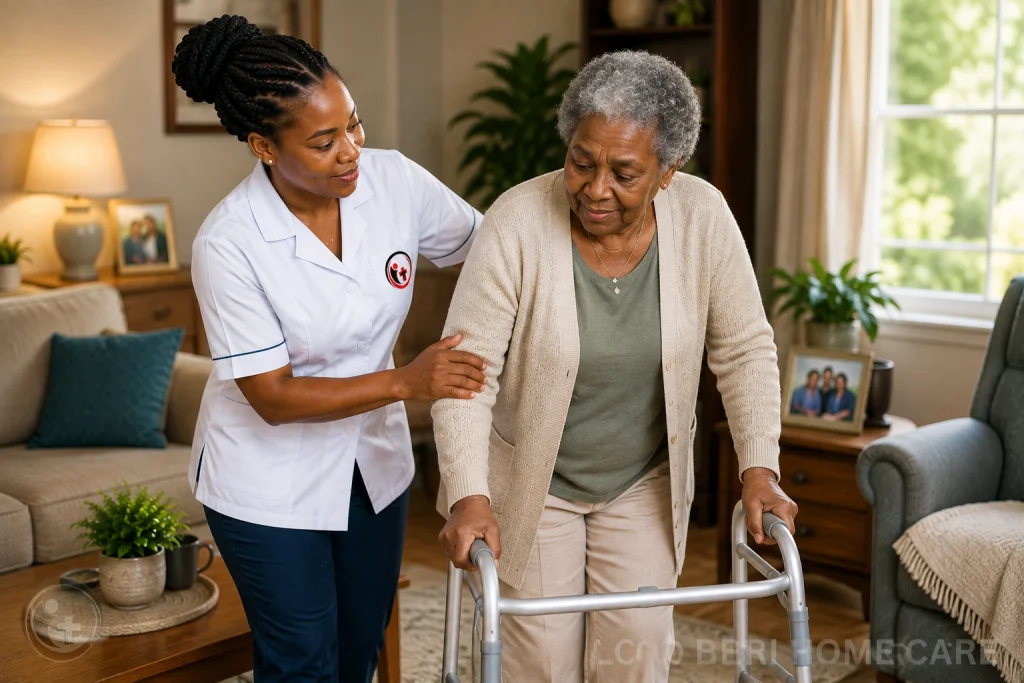
What Does a Caregiver Do for an Elderly Person?
An elderly caregiver can provide practical assistance with everyday activities while helping an older person remain as safe and independent as possible.
Depending on the person’s needs, support may include:
- Assistance with bathing and personal hygiene
- Dressing and grooming
- Meal preparation and feeding assistance
- Mobility assistance
- Toileting support
- Companionship
- Medication reminders or medication-related support according to the care plan
- Household assistance
- Monitoring for changes in health
- Accompanying the older person to appointments
The exact type of support should depend on the person’s individual needs. Older adults may need help with activities of daily living such as bathing, dressing, eating, using the toilet, and moving from one place to another.
10 Signs Your Elderly Parent Needs a Caregiver
1. Your Parent Is Struggling With Personal Hygiene
One of the clearest signs your elderly parent needs a caregiver is a noticeable decline in personal hygiene.
You may notice that your parent:
- Bathes less frequently
- Wears the same clothes repeatedly
- Has difficulty brushing their teeth
- Struggles with grooming
- Has difficulty using the bathroom independently
- Needs more assistance getting in and out of the shower
This does not necessarily mean your parent cannot care for themselves at all. It may simply indicate that certain daily activities have become physically difficult.
A caregiver can provide appropriate assistance while preserving your parent’s dignity and independence.
2. Your Parent Is Having Difficulty Preparing or Eating Meals
Changes in eating habits can be another important warning sign.
Pay attention if your parent:
- Frequently skips meals
- Has little food in the house
- Struggles to prepare meals
- Has difficulty shopping for food
- Has unexplained weight loss
- Seems too tired to cook
- Needs assistance eating
An older person may simply need someone to help with shopping and meal preparation. In other situations, professional care may be appropriate.
The National Institute on Aging notes that difficulty preparing meals and changes such as significant weight loss can indicate that an older adult needs additional support.
Check out NIA’s guidance on recognizing when an older adult needs help.
3. Your Parent Is Forgetting or Missing Medications
Medication management can become increasingly difficult as people age, particularly when several medicines are prescribed.
You may notice:
- Missed doses
- Duplicate doses
- Confusion about medication schedules
- Empty medication containers appearing too quickly
- Unopened medication packages
- Your parent being unsure which medication they should take
Medication problems should not be ignored.
However, do not change, stop, or adjust prescribed medication without appropriate medical advice.
If medication management is becoming difficult, discuss the situation with your parent’s healthcare professional and determine what type of assistance is appropriate.
4. Your Parent Has Started Falling or Becoming Unsteady
Repeated falls are a major warning sign.
You may notice that your parent:
- Holds onto furniture while walking
- Has difficulty standing from a chair
- Walks more slowly than before
- Has become afraid of falling
- Has fallen recently
- Avoids certain parts of the house because of difficulty walking
A fall can have serious consequences for an older adult, so repeated falls should be discussed with a healthcare professional.
If your parent needs help with mobility or everyday activities, a caregiver may provide appropriate assistance.
Internal link placement: Link fall prevention for elderly people to your existing fall-prevention article if you have already published it.
5. Your Parent Is Struggling to Keep the Home Safe
Look around the home carefully.
Are there:
- Unwashed dishes accumulating?
- Spoiled food in the refrigerator?
- Clothes and objects covering walkways?
- Uncollected rubbish?
- Poor lighting?
- Unsafe bathroom conditions?
- Items your parent can no longer reach safely?
Changes in the home can sometimes reveal difficulties that your parent hasn’t mentioned.
The NIA recommends paying attention to whether an older adult can safely prepare food, maintain personal hygiene, take medications correctly, and keep their home reasonably safe and organized.
6. Your Parent Is Having Difficulty Walking or Moving Around
Mobility problems are another important reason to consider additional support.
Your parent may struggle with:
- Getting out of bed
- Getting into or out of a chair
- Walking to the bathroom
- Climbing stairs
- Getting dressed
- Moving around the kitchen
- Going outside
If your parent is becoming increasingly dependent on furniture or another person to move around, don’t simply assume it is a normal part of aging.
A healthcare professional can help determine whether the change is related to weakness, illness, pain, medication, balance problems, or another issue.
7. Your Parent Is Becoming Increasingly Isolated
Physical care is not the only reason an elderly person may need support.
An older adult who lives alone may become increasingly isolated, especially if mobility problems make it difficult to leave the house.
You may notice:
- Fewer social interactions
- Loss of interest in activities
- Long periods spent alone
- Reluctance to leave home
- Reduced contact with friends or relatives
A caregiver or companion can provide practical assistance and social interaction while helping the person remain connected to family and community.
The CDC also emphasizes social connection and regular interaction as important aspects of older adults’ overall wellbeing.
8. Your Parent Is Showing Changes in Memory or Judgment
Occasional forgetfulness can happen with aging, but significant changes in memory, thinking, personality, or decision-making deserve attention.
For example, your parent may:
- Forget important appointments
- Become confused about familiar routines
- Make unusually unsafe decisions
- Forget whether medication was taken
- Leave appliances running
- Become confused about familiar places
These changes should not automatically be assumed to be dementia.
If you notice significant or worsening changes, encourage your parent to receive an appropriate medical evaluation.
The NIA notes that significant changes in memory, thinking, personality, or decision-making can indicate a need for medical attention and additional support.
9. You Are Constantly Worried About Your Parent Being Alone
Sometimes the biggest sign is your own level of concern.
If you regularly find yourself thinking:
“What if something happens and nobody is there?”
that concern deserves attention.
Perhaps your parent is still physically capable of doing many things but would be safer with someone checking on them regularly.
Professional home care does not always mean someone has to stay with your parent 24 hours a day.
Depending on the person’s needs, support might involve scheduled visits, assistance with personal care, meal preparation, mobility, medication routines, companionship, or nursing care.
The NIA notes that some older adults living alone may simply need regular check-ins, while others may need professional home health services.
10. Family Care Is Becoming Too Difficult to Manage
This is one of the most overlooked signs your elderly parent needs a caregiver.
Perhaps you live in another city or country.
Perhaps you have a job, children, or other responsibilities.
Perhaps another family member has been doing everything and is becoming exhausted.
Family members can provide tremendous support, but one person should not be expected to manage every caregiving responsibility indefinitely.
The NIA recommends sharing caregiving responsibilities and recognizing personal limits rather than expecting one person to handle everything alone.
Sometimes bringing in professional support is not about replacing the family.
It is about supporting the family.
If You Live Abroad and Your Parent Is in Cameroon
This situation can be especially difficult.
You may live in France, the United States, Canada, the United Kingdom, Belgium, or another country while your elderly parent remains in Cameroon.
You call regularly.
You send money.
You ask relatives to check on them.
But you may still worry:
Are they taking their medication?
Are they eating properly?
Did they fall?
Who will help them if something happens?
Who will take them to the hospital if they become seriously ill?
Long-distance caregiving can make it harder to notice changes in an older person’s condition. The National Institute on Aging recommends staying connected and, with the older person’s permission, working with people who see them regularly to identify concerns and coordinate support.
For families living abroad, professional home care can provide an additional layer of support between family visits and regular phone calls.
Does Needing a Caregiver Mean Your Parent Is No Longer Independent?
No.
Needing some assistance does not automatically mean that an elderly person has lost their independence.
In fact, appropriate support may help an older adult remain at home and continue doing the things they can safely do themselves.
The goal should not be to take over everything.
The goal should be to support what the person can no longer do safely while preserving their dignity and independence.
When Should You Consider Professional Home Care?
Consider discussing professional home care when your parent:
- Needs regular help with personal care
- Has repeated falls
- Has difficulty managing medications
- Is struggling to prepare meals
- Has significant mobility problems
- Needs assistance after hospitalization
- Has wounds requiring professional care
- Needs regular monitoring of health conditions
- Is becoming increasingly dependent on family members
- Lives alone and needs regular support
The NIA notes that home health services can assist older adults with needs including medications, wound care, medical equipment, physical therapy, and recovery after illness, surgery, or an accident.
How Leo Beri’s Home Health Care Agency Can Help
At Leo Beri’s Home Health Care Agency, we understand that families sometimes reach a point where their elderly parent needs more support than relatives can provide alone.
Our home healthcare services are designed to help older adults receive professional and compassionate support in the comfort of their own homes in Yaoundé.
Depending on the person’s needs, professional support may include:
- Personal care assistance
- Elderly care
- Home nursing care
- Medication-related support
- Vital signs monitoring
- Mobility assistance
- Post-hospital recovery support
- Wound care
- Support with daily routines
If you are living abroad and worried about an elderly parent in Cameroon, you do not have to manage everything from a distance by yourself.
You can arrange reliable professional support while remaining involved in your parent’s care and decisions.
👉 Learn more about our Home Nursing Care services or contact Leo Beri’s Home Health Care Agency to discuss your family’s needs.
Frequently Asked Questions
What are the signs your elderly parent needs a caregiver?
Common signs include difficulty with bathing and dressing, missed medications, poor nutrition, repeated falls, mobility problems, worsening hygiene, difficulty maintaining the home, memory or judgment changes, isolation, and increasing dependence on family members.
How do I know if my elderly parent can still live alone?
Look at whether your parent can safely manage essential daily activities such as eating, bathing, using the toilet, taking medications, moving around the home, preparing food, and responding appropriately to emergencies. If there are concerns, discuss them with a healthcare professional.
Should I hire a caregiver for an elderly parent who lives alone?
It depends on the person’s needs. Some older adults may only need regular check-ins or help with certain tasks, while others may require more frequent personal or nursing care.
What can a caregiver help an elderly person with?
Depending on the care arrangement, a caregiver may assist with personal care, meals, mobility, household tasks, companionship, appointments, and other daily activities. Nursing services may be needed when the person has clinical or medical care needs.
How can I help my elderly parent if I live abroad?
Maintain regular communication, stay connected with people who live near your parent, arrange appropriate professional support when necessary, and have a clear plan for emergencies. Long-distance caregiving works better when responsibilities are shared rather than managed by one person alone.
Does hiring a caregiver mean I am abandoning my parent?
No. Professional care can actually allow family members to remain involved while providing additional support for the older adult. The caregiver becomes part of the support system rather than replacing the family.
When should an elderly person receive professional nursing care instead of ordinary caregiving?
If the older adult requires clinical services such as wound care, medication administration according to a prescribed plan, vital-sign monitoring, post-hospital care, or management of other health needs, professional nursing care may be more appropriate than general companionship or household assistance.
Conclusion
Recognizing the signs your elderly parent needs a caregiver can be difficult, especially when your parent wants to remain independent.
But needing help with bathing, meals, medications, mobility, personal care, or everyday activities does not mean your parent has failed or lost their dignity. It simply means their needs may have changed.
The earlier families recognize those changes, the easier it can be to arrange appropriate support.
And if you live abroad while your parent is in Cameroon, professional home care can give you something extremely valuable:
peace of mind that someone reliable is there to support your loved one when you cannot be physically present.
At Leo Beri’s Home Health Care Agency, our goal is to provide quality, professional, and compassionate healthcare services at your doorstep.
If your elderly parent needs additional support at home in Yaoundé, contact us to discuss how we can help.
