
Joint stiffness in bedridden patients can develop when a person stays in one position for too long. When a parent or loved one in Cameroon becomes bedridden, families living abroad may worry about muscle weakness, pain, and reduced movement.
The good news is that appropriate positioning, regular assessment, and suitable movement can help reduce the risk of stiffness in many patients. If you are arranging care for a loved one in Yaoundé, understanding these measures can help you work with their caregivers and healthcare professionals to support comfort and mobility.
What Causes Joint Stiffness in Bedridden Patients?
Joint stiffness occurs when a joint becomes difficult to move through its normal range. It may develop when a person remains in one position for long periods and does not move their joints regularly.
Several factors can contribute to stiffness in bedridden patients:
- Prolonged immobility: Keeping joints in the same position for extended periods can reduce flexibility.
- Muscle weakness: Muscles may lose strength when they are not used regularly.
- Joint and neurological conditions: Arthritis, stroke, brain injuries, and other conditions can restrict movement.
- Pain and swelling: Discomfort may cause a person to avoid movement, increasing the risk of stiffness.
- Muscle contractures: Shortening of muscles, tendons, and other tissues can progressively limit joint movement.
The severity and speed of these changes vary from person to person. Early assessment helps identify problems before movement becomes more restricted.
Why Preventing Joint Stiffness Matters
Joint stiffness can affect more than a person’s ability to move their arms or legs. It may also make personal care and daily activities more difficult.
Possible consequences include:
- Difficulty bending or straightening the knees and elbows
- Reduced movement in the shoulders, hips, wrists, and ankles
- Pain or discomfort during dressing and bathing
- Greater difficulty changing position or transferring from bed to a chair
- Increased dependence on caregivers
- Difficulty maintaining comfortable body positioning
Severe contractures may become difficult to reverse. Prevention and early professional assessment are therefore important parts of bedridden patient care at home.
7 Ways to Prevent Joint Stiffness in Bedridden Patients
1. Encourage Safe Movement When Possible
Movement can help maintain joint flexibility and preserve the abilities a patient still has.
Depending on the person’s condition, suitable activities may include moving the hands, bending the elbows, moving the ankles, or changing position with assistance.
Encourage the person to perform movements independently when they can do so safely. If they cannot move a joint themselves, a healthcare professional may recommend assisted movement.
Do not force movement or continue an activity that causes significant pain.
2. Use Appropriate Positioning
Keeping a joint in one position for too long can contribute to stiffness and contractures.
Caregivers should help the patient maintain comfortable, supported positions and change position as appropriate for their medical condition and individual care plan.
Pillows and positioning aids may help support the arms, legs, and other body areas. The aim is to maintain comfortable alignment without placing excessive pressure on the joints or skin.
Patients with spinal injuries, recent surgery, fractures, or specific movement restrictions may require specialist positioning instructions.
3. Follow a Professional Range-of-Motion Exercise Plan
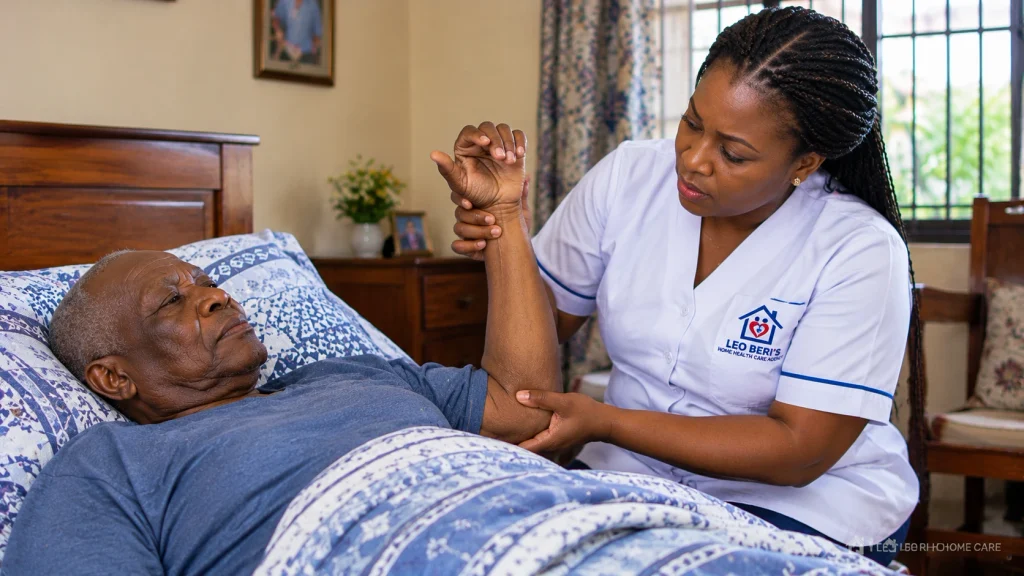
Range-of-motion exercises involve moving a joint through its available movement range. They may be active, meaning the patient moves independently, or passive, meaning a trained caregiver or healthcare professional assists with the movement.
Depending on the patient’s condition, a physiotherapist or other qualified healthcare professional may recommend gentle movements involving:
- Shoulders and elbows
- Wrists and fingers
- Hips and knees
- Ankles and toes
The appropriate movements, frequency, and limits depend on the patient’s diagnosis and physical condition.
Caregivers should receive practical instruction before performing passive exercises. Never force a stiff joint, pull a limb suddenly, or try to straighten a fixed contracture without professional guidance.
4. Watch for Early Signs of Stiffness
Early recognition allows families and caregivers to seek advice before movement becomes more restricted.
Watch for signs such as:
- Difficulty bending or straightening a joint
- Reduced movement compared with previous days or weeks
- Increasing discomfort during dressing or bathing
- A hand that increasingly remains clenched
- A knee or hip that is becoming difficult to straighten
- Pain or resistance during ordinary movement
Report new or worsening stiffness to a healthcare professional. Sudden loss of movement, severe pain, or a hot, swollen joint requires prompt medical assessment.
5. Manage Pain and Underlying Conditions
Pain can discourage movement and contribute to further loss of flexibility.
Patients with arthritis, stroke-related complications, neurological conditions, or previous injuries may need an individual management plan.
Give prescribed medicines only as directed. Do not increase pain medication or introduce new medicines without appropriate medical advice.
A clinician may recommend physiotherapy, pain management, positioning changes, or treatment of an underlying condition, depending on the cause of the stiffness.
6. Support Good Nutrition and Hydration
Adequate nutrition supports general health and helps maintain the body’s tissues.
Depending on the patient’s medical needs, provide balanced meals containing suitable sources of protein, carbohydrates, healthy fats, vitamins, and minerals.
Offer fluids regularly unless a healthcare professional has prescribed a fluid restriction. Patients with swallowing difficulties need an appropriate assessment and a safe feeding plan.
Good nutrition and hydration support overall care, but they cannot independently prevent or reverse every form of joint stiffness.
7. Check Progress and Keep Care Consistent
A consistent care plan helps family members and caregivers recognise changes in mobility.
Record relevant observations, such as which joints are becoming harder to move, whether exercises cause discomfort, and whether the patient can perform activities they previously managed.
If your loved one lives in Yaoundé while you live abroad, ask the caregiver or healthcare professional to share appropriate updates about mobility, comfort, and changes in daily care needs.
Regular communication helps families participate in care decisions and seek reassessment when necessary.
What Should Caregivers Avoid?
Trying to improve movement without understanding the patient’s condition can cause harm.
Caregivers should avoid:
- Forcing a joint beyond its comfortable range
- Pulling suddenly on the arms or legs
- Performing exercises that conflict with surgical or fracture precautions
- Continuing movements that cause significant pain
- Attempting to correct a fixed contracture without professional guidance
- Assuming every bedridden patient needs the same exercise routine
If the patient develops sudden weakness, new neurological symptoms, severe pain, or a sudden change in movement, seek urgent medical assessment rather than attempting exercises.
For additional guidance on the risks of prolonged immobility, read our article on preventing contractures in bedridden patients.
How Can Families Abroad Arrange Care for a Bedridden Loved One in Cameroon?
When a parent or relative lives in Cameroon and other family members live overseas, coordinating daily care can be challenging.
Families may need help with personal hygiene, safe positioning, prescribed medication, mobility support, skin checks, and monitoring for changes in health.
Leo Beri’s Home Health Care Agency provides home healthcare services in Yaoundé, Cameroon. Families can enquire about home nursing care in Yaoundé to discuss their loved one’s needs and the support that may be appropriate.
Before arranging care, explain the patient’s diagnosis, mobility limitations, current treatment, and any instructions from their medical team. The level of support should be based on an individual assessment rather than a general exercise routine.
Contact our team through WhatsApp to enquire about home healthcare support for your loved one in Yaoundé.
Frequently Asked Questions
Can a bedridden patient regain joint movement?
Some patients improve their movement with appropriate treatment, positioning, and rehabilitation. The outcome depends on the underlying condition, the severity of stiffness, and whether contractures have developed. A healthcare professional can assess the likely benefits of treatment.
How often should a bedridden patient perform joint exercises?
There is no single schedule suitable for every patient. The frequency and type of exercises should be based on the patient’s medical condition, pain, mobility, and professional recommendations.
Can family caregivers perform range-of-motion exercises?
Some caregivers can perform prescribed exercises safely after receiving appropriate instruction. However, patients with fractures, recent surgery, spinal injuries, or other movement restrictions may require specialist guidance.
Is joint stiffness the same as a contracture?
No. Joint stiffness describes difficulty moving a joint through its normal range. A contracture occurs when muscles, tendons, or other tissues shorten or tighten and permanently or persistently restrict movement. Stiffness can have several causes, and not every stiff joint has a contracture.
When should a bedridden patient see a healthcare professional?
Seek assessment if stiffness is worsening, movement is becoming more restricted, or pain interferes with care. Sudden loss of movement, severe pain, a hot or swollen joint, or new neurological symptoms requires prompt or urgent assessment.
How can families living abroad monitor a bedridden relative’s care in Cameroon?
Families can agree on regular updates with the local caregiver or healthcare team, ask about changes in mobility and comfort, and arrange professional reassessment when needed. Clear communication helps families remain involved in decisions even when they cannot provide daily care themselves.
Medical Disclaimer
This article provides general health education and does not replace an individual medical assessment, physiotherapy evaluation, or treatment plan. Exercise and positioning recommendations must be adapted to the patient’s diagnosis, abilities, and movement restrictions. Consult a qualified healthcare professional before starting a new exercise routine for a bedridden patient.
