
An elderly person may live alone for many years and remain active, capable, and independent. But sometimes gradual changes in memory, mobility, medication management, personal care, or everyday tasks can make living alone increasingly difficult. Recognizing the signs an elderly person should not be living alone does not mean taking away their independence. It means identifying when additional support may be needed to help them remain safe at home.
For an adult child, relative, or caregiver, the changes can be easy to miss. A parent may insist that everything is fine, while family members notice missed medications, unexplained falls, spoiled food, unpaid bills, or increasing difficulty managing the home.
The important question is not simply, “Is this person old enough to stop living alone?” There is no universal age at which someone should stop living independently. The more useful question is:
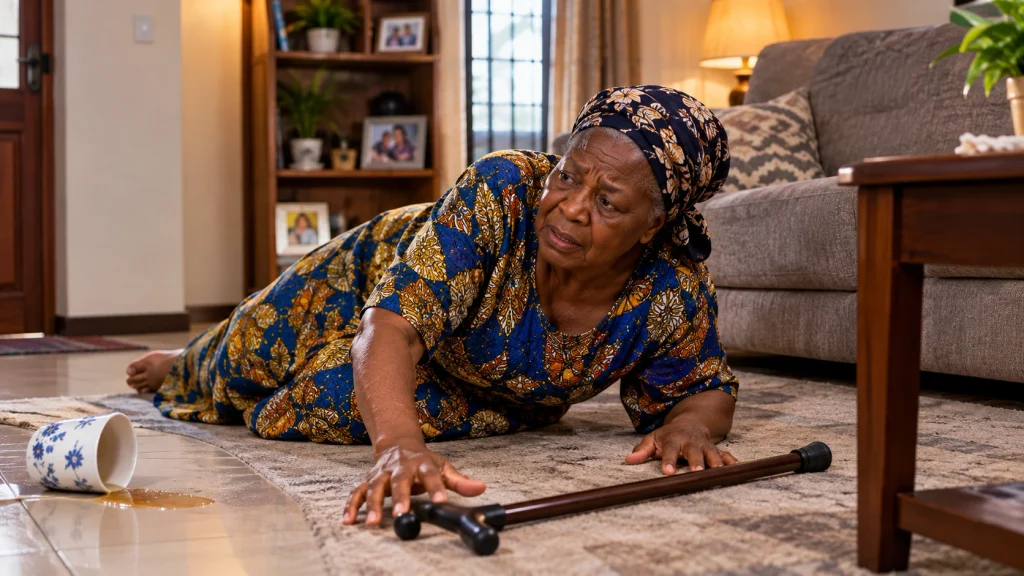
Signs an Elderly Person Should Not Be Living Alone: When Is Living Alone No Longer Safe?
Living alone is not automatically unsafe because someone has reached a certain age. Many older adults continue to manage their homes, medications, finances, meals, and personal care independently.
However, independent living can become less safe when a person’s ability to manage essential daily activities changes.
Families should consider several areas:
- Physical strength and mobility
- Balance and fall history
- Memory and cognitive function
- Medication management
- Chronic health conditions
- Ability to prepare and eat meals
- Personal hygiene
- Ability to use the bathroom safely
- Ability to respond to emergencies
- Ability to communicate with family or healthcare professionals
- Home safety
- Availability of nearby family, friends, or caregivers
The National Institute on Aging notes that support for older adults living at home can include help with personal care, household tasks, meals, transportation, health-related needs, and safety.
A change in one area does not necessarily mean an older person can no longer live alone. The concern becomes greater when several problems occur together, when difficulties are getting worse, or when the person can no longer safely manage essential needs.
12 Signs an Elderly Person Should Not Be Living Alone
The following warning signs can help families identify when an elderly parent or relative may need closer monitoring, practical assistance, professional home care, or medical assessment.
These are some of the most important signs an elderly person should not be living alone without additional support.
1. Frequent Falls or Difficulty Walking
Repeated falls are one of the clearest reasons to reassess whether an elderly person is safe living alone.
Pay attention if the person:
- Has fallen several times
- Frequently loses balance
- Holds furniture while walking
- Has difficulty standing up from a chair
- Struggles with stairs
- Needs increasing assistance to move around
- Avoids walking because they are afraid of falling
Falls and fractures in older adults can result from several factors, including weakness, balance problems, vision problems, medication effects, and hazards in the home.
A single fall should not automatically mean an older person must stop living alone. However, repeated falls, significant weakness, or difficulty getting up after a fall deserve attention.
If a fall results in serious injury, loss of consciousness, severe pain, head injury, or inability to get up safely, appropriate medical assistance should be sought promptly.
2. Difficulty Managing Medications
Medication management can become difficult when an older adult takes several medicines or has memory, vision, or organizational problems.
Warning signs include:
- Missing doses
- Taking a medicine more than prescribed
- Confusing one medicine with another
- Forgetting whether a dose was taken
- Having large quantities of unused medication
- Using expired medicines
- Being unable to explain what each medicine is for
- Becoming confused about medication schedules
Some medicines can also cause dizziness, drowsiness, changes in vision, or balance problems that may increase fall risk.
Medication concerns should not be handled by simply stopping or changing prescribed medicines. A doctor or pharmacist can review the medication list and determine whether changes or additional support are appropriate.
3. Increasing Confusion or Memory Problems
Occasional forgetfulness can happen for many reasons. But significant changes in memory or thinking may affect an older person’s ability to live safely without assistance.
Look for changes such as:
- Forgetting important appointments
- Repeatedly asking the same questions
- Forgetting familiar routines
- Getting lost in familiar places
- Leaving appliances switched on
- Becoming confused about medications
- Having increasing difficulty following instructions
- Forgetting important bills or responsibilities
Dementia is not a normal part of aging, and memory or cognitive changes can have different causes.
Most importantly, sudden confusion is different from gradual forgetfulness. Sudden confusion can have urgent medical causes and requires prompt medical assessment.
4. Poor Personal Hygiene
Changes in personal hygiene may indicate that an older adult is having difficulty managing everyday activities.
Examples include:
- Not bathing regularly
- Wearing the same clothes repeatedly
- Difficulty brushing teeth
- Difficulty grooming
- Unwashed hair
- Difficulty using the toilet safely
- Increasing difficulty maintaining personal cleanliness
Do not automatically assume that poor hygiene means the person is neglecting themselves.
Pain, weakness, reduced mobility, vision problems, memory changes, depression, medication effects, or difficulty accessing the bathroom can all contribute to changes in personal care.
The important issue is whether the person can still complete basic personal-care tasks safely and whether the difficulty is increasing.
5. Difficulty Preparing or Eating Meals
Nutrition can become a concern when an elderly person struggles to shop, prepare food, or remember to eat.
Watch for:
- Frequently skipping meals
- Spoiled food in the refrigerator
- Very little food in the home
- Difficulty using cooking appliances
- Unexplained weight loss
- Eating the same limited foods repeatedly
- Forgetting whether they have eaten
- Difficulty shopping for groceries
A person who cannot reliably obtain, prepare, or eat food may need additional support.
This does not necessarily mean they need someone living with them full-time. Meal preparation assistance, family visits, grocery support, or scheduled home-care visits may sometimes address the problem.
6. Problems Managing Household Tasks
A previously organized home may gradually become difficult to maintain.
Possible warning signs include:
- Unpaid household bills
- Accumulating laundry
- Dirty dishes
- Increasing clutter
- Difficulty shopping
- Problems obtaining essential supplies
- Difficulty keeping the home reasonably clean
- Forgetting important household responsibilities
These changes become more significant when the person previously managed these tasks without difficulty.
Families should look for changes from the person’s normal routine, rather than judging the home against someone else’s standards.
7. Leaving the Stove, Iron, or Appliances On
Forgetting to switch off a stove, iron, kettle, heater, or other appliance can create a serious household safety risk.
One isolated mistake does not establish that someone cannot live independently. However, repeated incidents are concerning, particularly when they occur together with memory problems or confusion.
Families can reduce risk by reviewing the kitchen environment, improving supervision when necessary, and discussing safer alternatives with the older person.
Home safety modifications can include improving lighting, reducing trip hazards, and installing appropriate bathroom safety equipment.
8. Repeated Medical Emergencies or Hospital Visits
Repeated hospital visits, urgent consultations, falls, medication problems, or episodes of worsening chronic illness may indicate that an older adult needs more consistent support.
This does not mean every hospitalization proves that someone cannot live alone.
Instead, ask:
- What caused the medical event?
- Has the underlying problem been addressed?
- Can the person manage the recommended care plan?
- Can they recognize when their condition is getting worse?
- Can they obtain help when needed?
- Are they able to attend follow-up appointments?
After hospitalization, some older adults may temporarily need additional assistance with mobility, medications, wound care, daily activities, or health monitoring.
9. Difficulty Using a Phone or Calling for Help
An older person living alone should have a practical way to contact someone when they need assistance.
Concern is warranted if the person:
- Cannot reliably use their phone
- Frequently forgets how to contact family
- Cannot explain where they are
- Does not know who to call during an emergency
- Cannot communicate important symptoms
- Has difficulty hearing or understanding emergency instructions
A simple emergency plan can make a significant difference.
Keep important contact numbers easily accessible and make sure the person knows how to use the available phone or communication device.
10. Social Withdrawal or Sudden Changes in Behavior
A noticeable change in social behavior can be worth discussing.
Examples include:
- Suddenly avoiding family
- Stopping activities they previously enjoyed
- Becoming unusually withdrawn
- Losing interest in normal routines
- Becoming unusually suspicious
- Showing significant changes in behavior
Social withdrawal alone does not prove depression, dementia, or another medical condition.
It can have many possible explanations, including bereavement, physical illness, hearing problems, mobility limitations, loneliness, medication effects, or changes in circumstances.
The important point is to notice significant changes and discuss them appropriately rather than ignoring them.
Social connection is also relevant to healthy aging. The National Institute on Aging notes that social isolation and loneliness can affect overall well-being.
11. Difficulty Managing Money or Recognizing Financial Problems
Financial difficulties can sometimes be another sign that an older adult is struggling with everyday tasks.
Look for:
- Unpaid bills that were previously handled on time
- Repeatedly losing money
- Difficulty understanding routine payments
- Unusual or unexplained purchases
- Forgetting financial obligations
- Difficulty distinguishing legitimate requests from suspicious ones
Financial changes can have many causes and should not automatically be interpreted as cognitive decline.
However, repeated problems may justify a broader assessment of whether the person can safely manage important responsibilities independently.
12. The Person Is No Longer Able to Handle Basic Daily Activities
One of the most useful ways to assess independence is to look at what the person can actually do every day.
Activities of Daily Living (ADLs) include basic activities such as:
- Bathing
- Dressing
- Toileting
- Eating
- Grooming
- Moving from a bed to a chair
- Walking safely
Instrumental Activities of Daily Living (IADLs) are more complex activities needed for independent living, such as:
- Shopping
- Cooking
- Managing medications
- Transportation
- Managing finances
- Housekeeping
- Using communication devices
The ability to perform these activities is an important part of assessing an older person’s functional status.
If an elderly person is gradually losing the ability to perform several essential activities, the family should consider whether additional support is needed.
Which Warning Signs Are Most Urgent?
Not every warning sign requires an emergency response.
Some changes may mean the family should increase monitoring or arrange a healthcare assessment. Others require prompt medical attention.
Needs closer monitoring
Examples include:
- Increasing difficulty with household tasks
- Occasional medication confusion
- Gradually worsening mobility
- Increasing difficulty with personal care
- Repeated missed appointments
- Reduced ability to prepare meals
- Increasing social withdrawal
These concerns should be discussed with the person and, when appropriate, their healthcare professional.
Needs prompt medical assessment or immediate help
Seek appropriate medical assistance promptly if an older person develops:
- Sudden severe confusion
- Sudden weakness
- Difficulty speaking
- Severe breathing difficulty
- Chest pain
- Loss of consciousness
- A serious fall or injury
- Sudden major change in alertness
- Signs suggestive of a stroke
- Inability to safely meet basic needs
Sudden confusion in particular should not simply be assumed to be “old age.” It can have several medical causes and requires prompt assessment.
Living Alone vs Living Independently: What’s the Difference?
Living alone does not necessarily mean being unsafe.
Likewise, needing some assistance does not mean an older person has lost their independence.
An elderly person may continue living at home safely with the right level of support, such as:
- Regular family check-ins
- Scheduled home visits
- Medication organization
- Meal assistance
- Transportation support
- Home safety modifications
- Professional home care
- Health monitoring
- Emergency contacts
The National Institute on Aging describes home-based support as a way to help people remain as independent and safe as possible, depending on their individual needs.
The goal should often be safe independence, rather than automatically removing independence.
What Should Families Do About the Signs an Elderly Person Should Not Be Living Alone?
Step 1: Have a Respectful Conversation
Avoid beginning with, “You can no longer live alone.”
Instead, describe specific observations.
For example:
“I noticed that you’ve fallen twice recently, and I’m worried about how difficult it has become for you to move around the house.”
Focus on safety and support rather than age.
Whenever possible, involve the older person in decisions about their care.
Step 2: Observe the Person’s Daily Function
Look at what actually happens during a normal day.
Can the person:
- Get out of bed safely?
- Bathe and dress?
- Prepare food?
- Take medicines correctly?
- Use the bathroom?
- Walk around the home?
- Manage the phone?
- Recognize an emergency?
- Keep important appointments?
Functional ability and recent changes are important information for healthcare professionals when assessing an older adult.
Step 3: Review the Home Environment
Look for:
- Loose rugs or clutter
- Poor lighting
- Unsafe stairs
- Bathroom fall hazards
- Difficult-to-reach items
- Unsafe kitchen practices
- Medication storage problems
- Missing emergency contacts
The National Institute on Aging recommends practical home-safety measures such as improving lighting, reducing trip hazards, and adding appropriate bathroom supports.
Step 4: Speak With the Person’s Healthcare Professional
If there has been a noticeable change in memory, mobility, appetite, behavior, medication management, or ability to perform daily activities, professional assessment can help identify possible causes.
Some changes that appear to be “just aging” may have treatable or addressable causes.
Bring a list of medications and describe specific changes rather than simply saying, “They are getting old.”
Step 5: Build a Support Plan
The appropriate plan depends on the person’s needs.
Possible support may include:
- Family visits
- Scheduled telephone or video check-ins
- Meal assistance
- Transportation
- Medication support
- Home nursing
- Personal-care assistance
- Health monitoring
- Professional elderly home care
The support plan can also change over time. Someone may need only a few visits each week now and more assistance later.
How Home Care Can Help an Elderly Person Stay Safely at Home
Professional home care can sometimes provide the additional support an older adult needs without automatically requiring them to leave their home.
Depending on the person’s needs and care arrangement, support may include:
- Personal care
- Hygiene assistance
- Medication support
- Vital-sign monitoring
- Mobility assistance
- Meal-related support
- Companionship
- Post-hospital recovery support
- Chronic disease monitoring
- Communication with family about relevant care observations
For families considering elderly home care in Yaoundé, Leo Beri’s Elderly Home Health Care service provides support with personal care, daily activities, health monitoring, medication reminders, mobility support, hygiene, feeding assistance, and companionship.
Professional home care should complement appropriate medical treatment rather than replace it. The level of care should be based on the person’s actual needs, preferences, health condition, and care plan.
For older adults who need professional nursing support, Leo Beri’s Home Nursing Care in Yaoundé provides services that may include medication support, wound care, vital-sign monitoring, post-hospital recovery support, and chronic-condition monitoring.
How Families Living Abroad Can Support an Elderly Parent in Yaoundé
Families living outside Cameroon may face a particular challenge: they may care deeply about an aging parent but cannot visit every day.
A practical support plan can include:
- Regular phone or video calls
Use scheduled calls rather than relying only on occasional conversations. - Trusted local contacts
Identify relatives, neighbors, friends, or healthcare professionals who can respond when needed. - Scheduled home visits
Regular visits can help identify changes that may not be obvious during a phone call. - Medication monitoring
If medication management has become difficult, discuss appropriate support with a healthcare professional. - Health updates
Keep important family members informed about significant changes. - Emergency planning
Make sure everyone knows who should be contacted if the older adult becomes unwell. - Professional home care when appropriate
Professional support can provide an additional layer of assistance when family members cannot be physically present.
Leo Beri’s Home Health Care Agency provides elderly care and home nursing support in Yaoundé and surrounding communities. Families can discuss the older person’s needs and determine whether an appropriate home-care arrangement is possible.
A Simple Home Safety Checklist for an Elderly Person Living Alone
Use this checklist as a starting point. It is not a substitute for an individual professional assessment.
| Area | What to Check |
|---|---|
| Mobility | Can the person walk and transfer safely? |
| Bathroom | Are there slippery surfaces, poor lighting, or other fall hazards? |
| Kitchen | Can cooking appliances be used safely? |
| Medication | Can medicines be taken according to the prescribed routine? |
| Food | Are meals available, prepared safely, and being eaten? |
| Communication | Can the person call family or appropriate emergency assistance? |
| Memory | Can important routines and appointments be managed? |
| Hygiene | Can personal care be maintained safely? |
| Medical care | Are appointments and prescribed care routines being followed? |
| Emergency plan | Does the person know who to call if something goes wrong? |
If several answers are “no” or “not reliably,” it may be time to discuss additional support.
When Home Care May Be Appropriate
Home care may be useful when an older adult has increasing difficulty with:
- Daily activities
- Medication management
- Mobility
- Personal hygiene
- Meal preparation
- Chronic disease monitoring
- Health monitoring
- Post-hospital recovery
- Family members living far away
- Repeated safety concerns
The appropriate amount of support varies. Some people may need occasional visits, while others may need more regular assistance.
For example, an older adult recovering from hospitalization may temporarily need more support and gradually require less as their function improves.
Similarly, an older person with an ongoing health condition may benefit from regular monitoring according to their healthcare plan.
Frequently Asked Questions
At what age should an elderly person stop living alone?
There is no single age at which everyone should stop living alone. The decision should be based on functional ability, health, cognition, mobility, safety, medication management, and available support rather than age alone.
How do I know if my elderly parent is safe living alone?
Look at whether your parent can reliably manage essential daily activities, medications, meals, personal care, household safety, communication, and emergencies. A noticeable decline in several areas is a reason to seek further assessment.
Watching for the signs an elderly person should not be living alone can help families identify when additional support may be necessary.
What are the biggest dangers for elderly people living alone?
Important concerns include falls, medication problems, difficulty responding to emergencies, unsafe appliances, worsening medical conditions, poor nutrition, and difficulty managing essential daily activities.
Can an elderly person with memory problems live alone?
It depends on the severity and cause of the memory problem and how it affects daily safety. Mild forgetfulness does not automatically mean someone cannot live alone, but significant or worsening problems with medications, cooking, navigation, finances, or emergencies may require additional support.
What should I do if my elderly parent refuses help?
Try to understand the reason for the refusal. The person may fear losing independence, becoming a burden, or having strangers in the home. Discuss specific concerns respectfully and involve an appropriate healthcare professional when necessary.
How can I help my elderly parent stay independent at home?
Focus on the person’s abilities and add support where needed. Home modifications, regular family check-ins, transportation, meal assistance, medication support, and professional home care may allow an older person to remain at home while receiving appropriate assistance.
Is home care better than moving an elderly parent into a facility?
There is no universally appropriate choice. Some older adults can remain safely at home with adequate support, while others may require a level of supervision or medical care that cannot reasonably be provided at home. The decision should be based on individual needs and professional assessment.
What services can a home caregiver provide for an elderly person?
Depending on the caregiver’s role and the agreed care plan, support may include personal care, hygiene, companionship, meal-related assistance, mobility support, medication reminders, and help with daily activities. Nursing needs may require a qualified healthcare professional.
How often should someone check on an elderly person living alone?
There is no universal schedule. The frequency should depend on the person’s health, mobility, memory, ability to manage daily activities, emergency response ability, and available support. Someone with significant safety concerns may need more frequent contact.
Can professional home care help an elderly person remain at home?
Yes, home care can provide additional support for some older adults who want to remain at home. The type and frequency of care should be matched to the person’s individual needs and should not be treated as a replacement for medical treatment when medical care is required.
Conclusion: The Goal Is Safe Independence
Recognizing the signs an elderly person should not be living alone is not simply about deciding whether an older adult should continue living independently.
The more useful question is:
What level of support does this person need to remain safe, healthy, and as independent as possible?
A few changes may be manageable with family involvement or home modifications. More significant changes may require regular home care or nursing support. Sudden or serious symptoms require appropriate medical attention rather than simply increasing supervision.
For families caring for elderly parents in Yaoundé, Leo Beri’s Home Health Care Agency provides elderly home care and home nursing support based on individual needs. Families can contact the agency to discuss their loved one’s situation and explore an appropriate home-care arrangement.
