
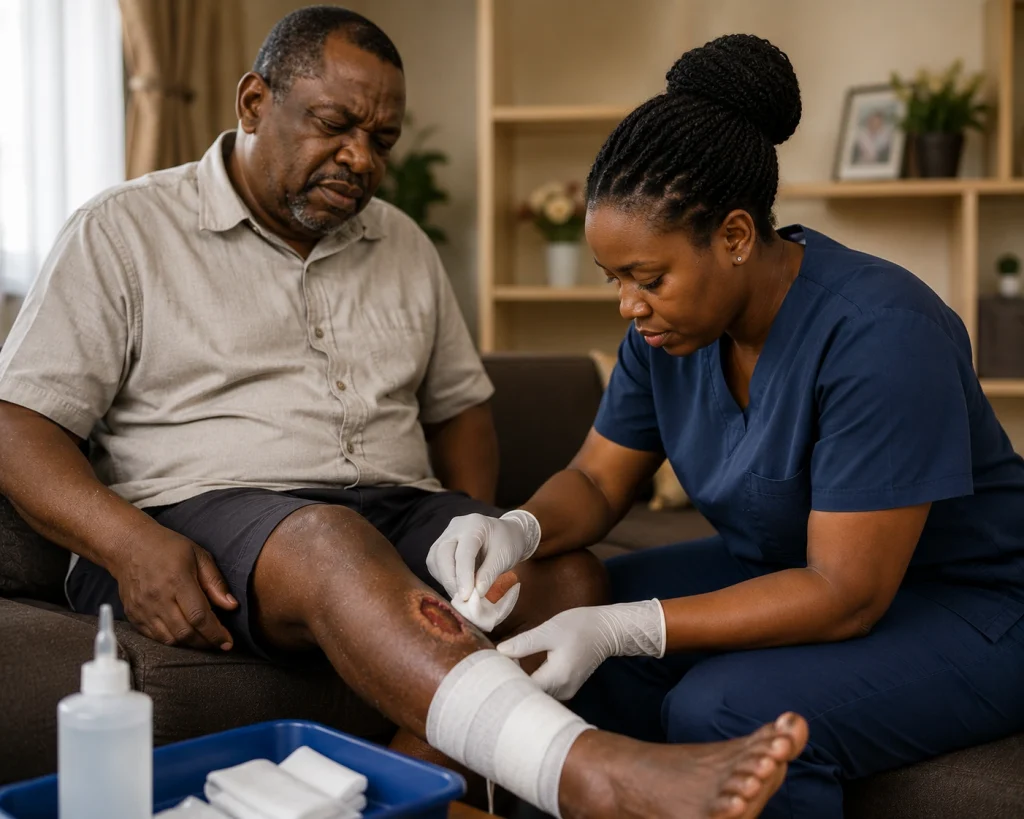
People living with diabetes often notice that even small cuts, blisters, or scratches take much longer to heal than they should. While a minor wound may heal within days in a healthy person, it can take weeks—or even months—for someone with diabetes.
Slow-healing wounds are one of the most serious complications of diabetes because they increase the risk of infection, foot ulcers, and, in severe cases, amputation. Understanding why diabetic wounds heal more slowly can help you take the right steps to protect your health and prevent complications.
Why Does Diabetes Slow Wound Healing?
Several factors contribute to delayed wound healing in people with diabetes.
1. High Blood Sugar Damages Blood Vessels
Consistently high blood sugar damages both small and large blood vessels, reducing blood flow to injured tissues.
Poor circulation means less oxygen and fewer nutrients reach the wound, making healing slower.
2. Poor Blood Circulation
Healthy blood circulation is essential for wound healing.
People with diabetes often develop poor circulation, especially in the legs and feet. Without enough blood supply, wounds receive fewer infection-fighting cells and healing nutrients.
3. Nerve Damage (Diabetic Neuropathy)
Diabetes can damage the nerves, particularly in the feet.
This condition, known as diabetic neuropathy, reduces the ability to feel pain, heat, or injury. As a result, a person may not notice a small cut, blister, or burn until it becomes infected.
4. Weakened Immune System
High blood sugar affects the body’s immune system, making it harder to fight bacteria and other germs.
This increases the risk of wound infections and further delays healing.
5. Increased Risk of Infection
Bacteria grow more easily in wounds when blood sugar is poorly controlled.
An infected wound takes much longer to heal and may require antibiotics, specialized wound care, or hospitalization.
Which Wounds Are Most Common in People with Diabetes?
People with diabetes frequently develop:
- Foot ulcers.
- Cuts and scratches.
- Blisters.
- Pressure sores.
- Burns.
- Surgical wounds.
- Cracked heels.
The feet are particularly vulnerable because of poor circulation and reduced sensation.
Warning Signs of an Infected Diabetic Wound
Seek medical attention immediately if you notice:
- Redness spreading around the wound.
- Swelling.
- Warm skin around the wound.
- Pus or foul-smelling discharge.
- Increasing pain.
- Fever.
- Black or dead tissue.
- A wound that does not improve after several days.
Early treatment can prevent serious complications.
How to Help Diabetic Wounds Heal Faster
Keep Your Blood Sugar Under Control
Good blood sugar control is the most important step in promoting wound healing.
Monitor your blood glucose regularly and take your medication exactly as prescribed.
Clean the Wound Properly
Wash the wound gently with clean water or saline solution.
Keep it clean and covered with a sterile dressing.
Avoid using harsh chemicals unless recommended by a healthcare professional.
Change Dressings Regularly
Replace wound dressings according to your healthcare provider’s instructions to reduce the risk of infection.
Always wash your hands before and after changing a dressing.
Avoid Walking Barefoot
Even a small injury can become serious if left unnoticed.
Wear comfortable, well-fitting shoes and clean socks to protect your feet.
Check Your Feet Every Day
Inspect both feet daily for:
- Cuts.
- Blisters.
- Swelling.
- Redness.
- Cracks.
- Nail problems.
Use a mirror or ask someone to help if you cannot see the bottom of your feet.
Eat a Healthy Diet
A balanced diet rich in:
- Lean protein.
- Fruits.
- Vegetables.
- Whole grains.
- Healthy fats.
provides the nutrients your body needs for tissue repair and healing.
Stay Physically Active
Regular physical activity improves blood circulation, helping oxygen and nutrients reach healing tissues.
Choose activities that are safe for your condition and approved by your healthcare provider.
Stop Smoking
Smoking further reduces blood flow and significantly delays wound healing.
Quitting smoking improves circulation and lowers the risk of complications.
How to Prevent Diabetic Foot Ulcers
You can reduce your risk by:
- Checking your feet every day.
- Keeping your feet clean and dry.
- Moisturizing dry skin (avoid applying lotion between the toes).
- Cutting toenails carefully or having them trimmed professionally if needed.
- Wearing properly fitting footwear.
- Never walking barefoot.
- Attending regular diabetic foot examinations.
Prevention is far easier than treating a diabetic foot ulcer.
When Should You See a Healthcare Provider?
Seek medical care immediately if:
- A wound is not improving after a few days.
- The wound becomes red, swollen, or painful.
- You notice pus or a bad smell.
- You develop a fever.
- The wound becomes black or develops dead tissue.
- You have a foot ulcer.
- You have diabetes and any wound appears deeper than expected.
Delaying treatment can increase the risk of severe infection and amputation.
The Role of Professional Wound Care
Some diabetic wounds require specialized care, including:
- Professional wound cleaning.
- Advanced wound dressings.
- Infection management.
- Pressure relief techniques.
- Blood sugar monitoring.
- Patient education.
- Regular wound assessment.
Receiving professional care early often leads to faster healing and fewer complications.
Conclusion
Diabetic wounds heal more slowly because high blood sugar affects blood circulation, damages nerves, weakens the immune system, and increases the risk of infection. Even a small cut can become a serious medical problem if it is not treated promptly.
The good news is that many complications can be prevented through good blood sugar control, daily foot inspections, proper wound care, healthy lifestyle habits, and early medical attention.
At LEO BERI’S HOME HEALTH CARE AGENCY, we provide professional diabetic wound care, home nursing services, blood sugar monitoring, diabetic foot assessments, dressing changes, and patient education throughout Yaoundé, Cameroon. Our goal is to help people living with diabetes heal safely, prevent complications, and enjoy a healthier life.
